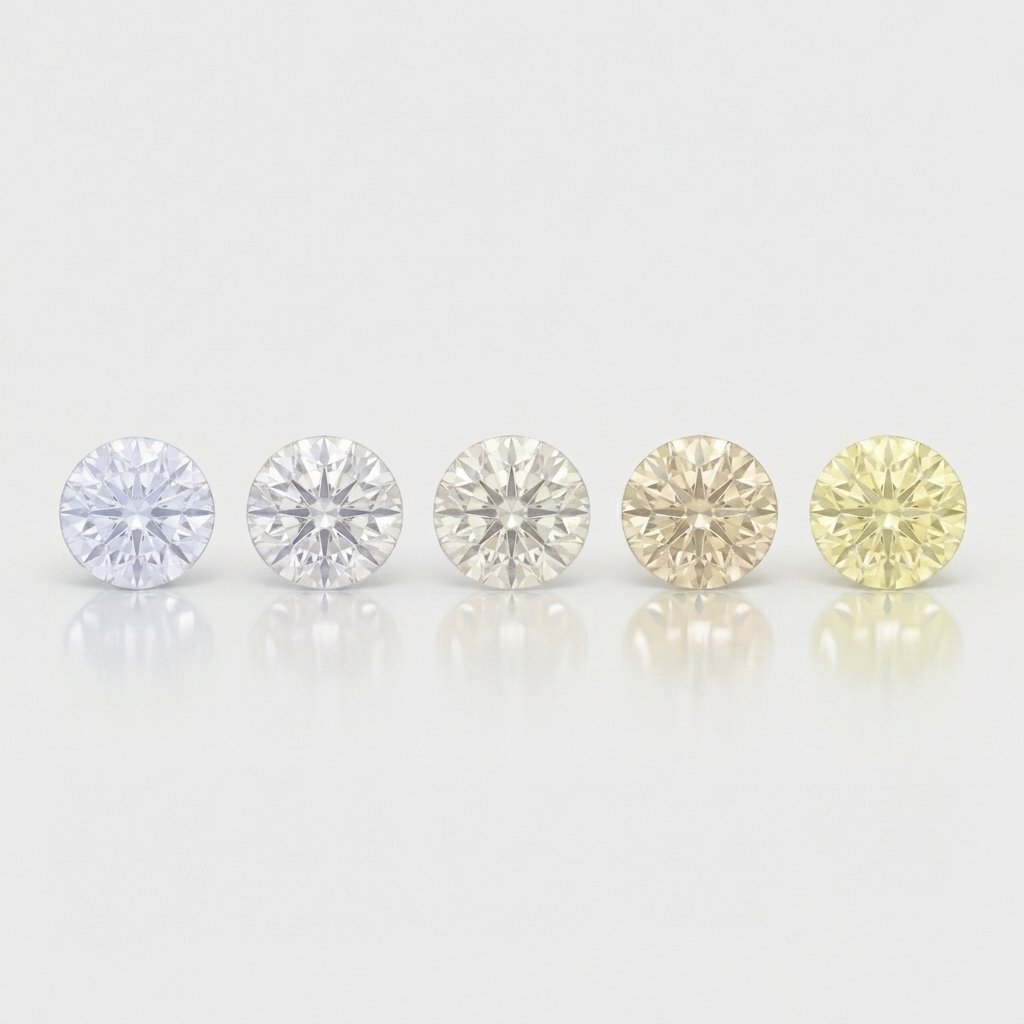
Diamond color
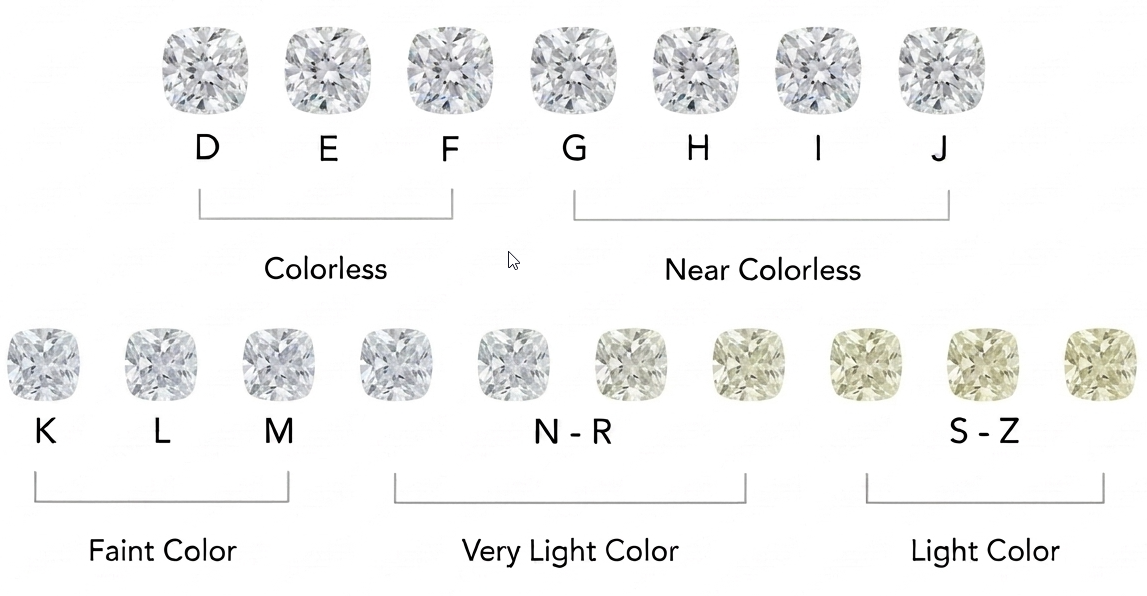
Professional Diamond Color Grading (D–N Scale)
Professional diamond color grading in the D–N range is based on the international GIA (Gemological Institute of America) scale, which measures the degree of colorlessness. The less color a diamond has (the whiter it is), the greater its rarity and value.
Colorless Group (Absolutetly Colorless)
- D - Exceptional White+ (River+). Completely colorless, rarest, and most expensive. Noticeable crystalline brilliance.
- E - Exceptional White (River). Traces of color visible only under a gemological loupe by an expert.
- D - Rare White+ (Top Wesselton+). Very subtle trace of color, discernible only to a professional when viewing the stone from the bottom.
Near Colorless Group
- G - Rare White (Top Wesselton). A stone of high whiteness; the difference compared to F is imperceptible when set in jewelry.
- H - White (Wesselton). Jewelry standard, excellent balance of price to visual quality.
- I - Top Crystal (Top Crystal). Slight warm tones, looks great in yellow gold.
- J- Crystal (Crystal). Warmer shade, visible to the eye, yet attractive in price when set in colored gold.
Faint Group
- K- Tinted White (Top Cape). Noticeable, delicate yellowish tone.
- L- Tinted White (Cape). The warm coloration becomes more pronounced.
- M- Stonowana biel (Cape). Wyraźny, ciepły odcień żółci.
Very Light Group
- N- Tinted Color (Dark Cape). A clear, light yellow or brown tint, which.
Understanding Diamond Color: The GIA Standard
The beauty of a diamond is not just in how it sparkles, but in the subtle nuances of its light. When we talk about diamond color, we aren’t talking about a tint; we are measuring the stone’s purity. Professional grading assesses the degree to which a diamond is colorless. The industry standard, established by the GIA (Gemological Institute of America), uses a scale that begins at D (colorless) and ends at Z (light yellow or brown).
The Official GIA Color Grading Scale
To help you make the right choice for your piece of jewelry, we break down the color spectrum into logical categories:
- Colorless D - F
The most sought-after and rare diamonds. They appear icy white even under professional magnification.
- Near-Colorless G – J
The expert’s favorite. These diamonds appear colorless to the naked eye, offering incredible value and brilliance.
- Faint K – M
A subtle warmth begins to emerge. Often chosen for unique, vintage-style, or yellow gold settings.
- Very Light N – R
A visible golden or brownish tint is present, adding a distinct character to the stone.
- Light S – Z
A clear saturation of color. These stones are often selected for custom designs where the color is a featured element.
The Internationaldiamondssales Approach: How to Choose Your Perfect Diamond
At Internationaldiamondssales, we believe that the “perfect” color depends entirely on your personal style and the setting you choose. Here is how we guide our clients:
The Power of Setting: If you select a diamond in the G–J (Near-Colorless) range, setting it in yellow or rose gold can mask the subtle warmth, making the stone look as pristine as a D-grade diamond, but at a more accessible price point.
The “Sweet Spot” Strategy: Many of our clients find that G and H grades offer the ideal balance between visual perfection and budget efficiency. When mounted in a ring, these stones provide that brilliant, crisp white appearance that most people desire.
Embracing Warmth: Don’t be afraid of the K–M range. When paired with a vintage setting or warm-toned metals, these diamonds offer a soft, timeless, and romantic aesthetic that is truly one-of-a-kind.
Why Grading Accuracy Matters
Diamond color grading is a technical process performed under strictly controlled lighting conditions. At Internationaldiamondssales, we prioritize transparency. We ensure that every stone is evaluated against master sets to guarantee the grade you are paying for is exactly what you are getting.
Whether you are looking for the absolute icy perfection of a D-grade or the unique character found further along the scale, our team is here to ensure that your choice reflects both your taste and your vision for the perfect piece of jewelry.




